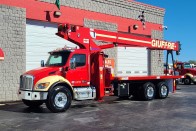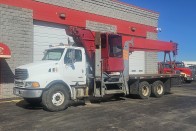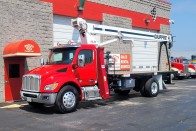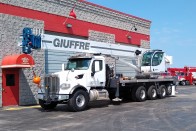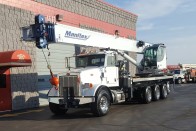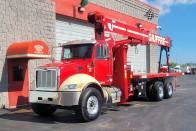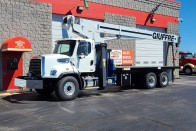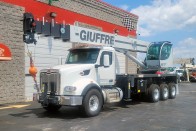





Selecting the Right Boom Truck
With an almost endless list of available options and configurations, selecting the right boom truck for your crew can seem like an overwhelming challenge. To help you we’ve put together this introductory guide with the most important factors you should consider during your decision making process. As you read through this guide, don’t hesitate to give us a call – we’re here to help answer any questions you may have.
Know Your Capacity and Boom Length Needs
Looking back at the lift requirements of your past and most common types of projects will quickly help you determine your ideal lift capacity and boom length requirements. You’ll want to purchase a boom truck that can handle 90% of your projects. The rest of the time you’ll want to simply rent a larger capacity crane. This will ensure you’re getting the biggest return on your investment and reduce the amount of crane you need to purchase.
Boom Mounting Options
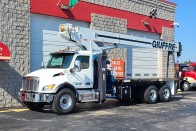
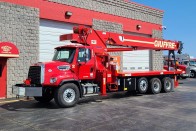
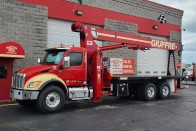
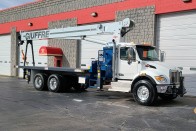
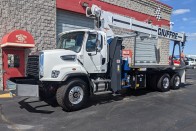
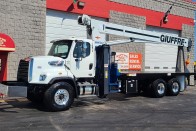
Boom cranes are available in standard and rear mount configurations. There are advantages and disadvantages to both.
Standard Mount Boom Crane (SM)
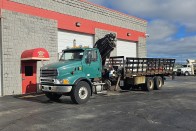
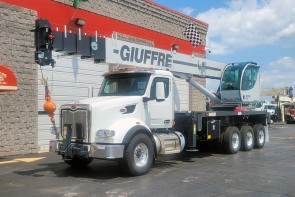
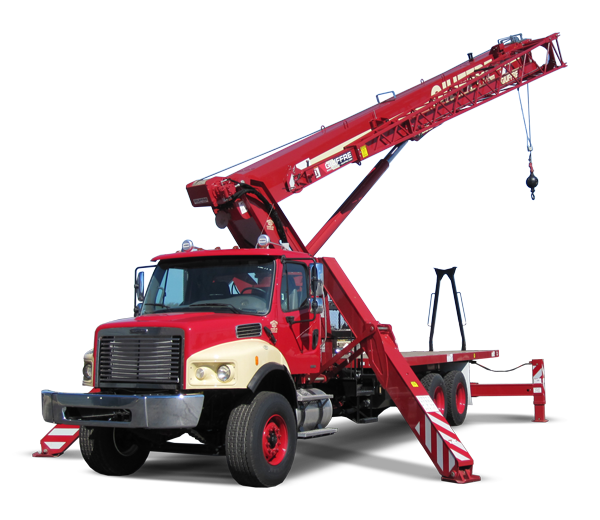
- Boom is located directly behind the truck’s cab
- Most common boom truck configuration
- Most cost effective
- Provides increased bed space for storing product
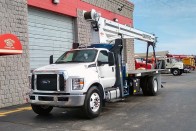
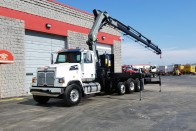
Rear Mount Boom Cranes (RM)
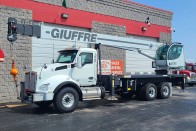
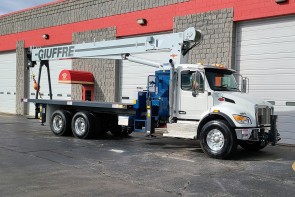
- Boom is located at the back of the truck bed
- Allows crane operator to get closer to work area
- Requires more bed space and reduces the amount available product storage space.
- Many reduce the trucks hauling capacity
Rear Mount Sitting Boom Crane (RS)
- Boom is located at the back of truck bed
- Provides increase operator comfort and allows operator to rotate with boom
- Operator is positioned in a sitting position, rather than on the ground
- Provides a 360-Degree working area
- More expensive
Short vs. Long Boom Lengths
Short Booms
- Lighter and easier to operate
- Requires a smaller outrigger footprint
- Ideal for tight working conditions and lighter lift requirement projects
Long Booms
- Increased crane reach and height, but at a reduced lifting capacity
Single vs. Tandem Axel Trucks
Again, take a look at your most common types of projects. If you’re commonly working on residential projects that require driveway approach you’ll want to consider a single axel truck. With a lighter gross weight and shorter wheel base you be reducing the likelihood of causing of costly property damage.
If you’re more commonly working on commercial projects, or projects that require a larger lifting capacity you’ll want to consider a tandem axel truck. Tandem axels increase the trucks hauling capacity and also accommodate larger capacity cranes.
When to Purchase a Front Stabilizer
Adding front stabilizers is a cost effective way of increasing your boom cranes versatility and stability. With a front stabilizer you benefit from:
- Additional all-around truck stability, not just over the cab
- 5-Point load distribution
- Ability to safely lift over the truck’s cab - 360 degrees of crane operation
Adding a Jib
Adding a Jib to your crane is a easy way to add versatility to you boom truck. With an installed Jib, you get extra boom length when you need it, and it’s out of the way when you don’t. Keep in mind however, that having a jib will add weight to the crane’s boom when stowed and slightly decrease the cranes lifting capacity.
Man Baskets
Adding a man basket option to your boom truck is essential for all most all truck owners. With the optional man-basket you’ll instantly increase your trucks capabilities and reduce the need to rent portable man-lifts for your projects.